A snowy March morning with driving snow is quiet except for the wind. So much activity and so little noise. The dogs carouse in the snow, stopping to look for me in the whirling snow.
My garden continues to enthrall me. It receives and displays the snow magically. In the winter garden the trees, shrubs and perennials become majestic. They wear the drifts with natural grace.
The spruce grow taller and fuller, the boxwoods are covered with frosting and the sedum wear top hats. Within the windbreak the dark trunks stand out in the whiteness. The bench looks filigreed.
A Garden Party
A garden filled with people is a wonderful sight. Friends and relatives entered our garden July 7 to celebrate the April marriage of our daughter and her husband. As you would imagine, weeks of work prepared the stage for the event. The final week with temperatures hovering around 100 degrees the work intensified. Friends toiled along with us. For me it was a treat to spend my mornings tending the garden.
That last week I began watering the beds and the lawn near the house. An Iowa drought brought high temperatures and dry soil. Shrubs and perennials were wilting and leaves turning brown. The water helped and the perennials perked up and blooming increased although not to normal levels.
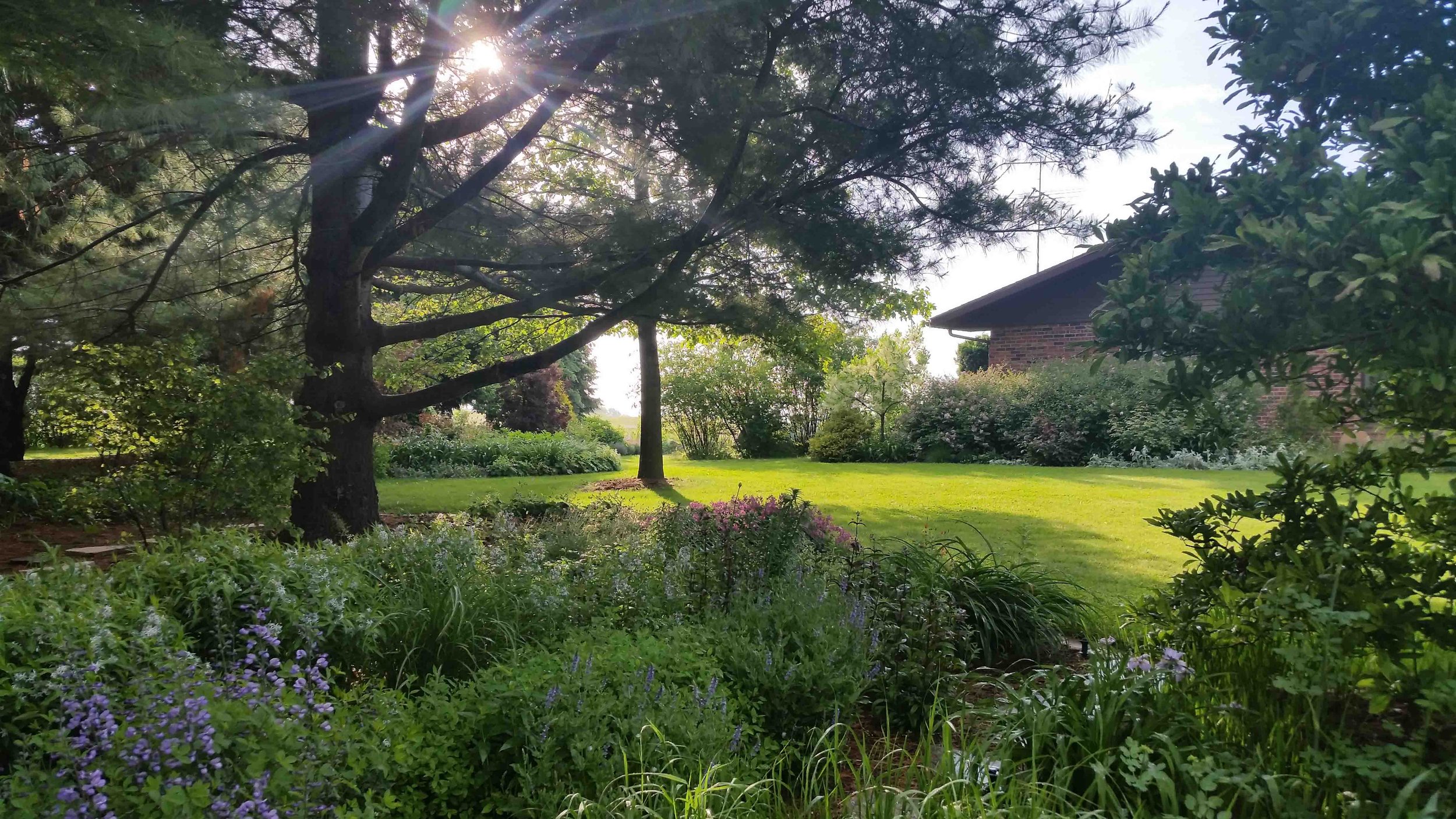
Shade from a red oak and white pines and a white tent made sitting in the yard possible. Hearing floating conversations rewarded us and validated the intense preparations.
With an early spring, blooming throughout the garden was ahead of schedule. Normally, on July 7 daylily blooms crowd the garden with a multitude of rich colors. This year the blooming started early and then due to the dry conditions, did not reach the expected peak. The phlox and baloon flower did exceptionally well and the hibiscus bloomed for the party.
I had a wonderful time, surrounded by family and friends and a garden that was just right for one day.
That last week I began watering the beds and the lawn near the house. An Iowa drought brought high temperatures and dry soil. Shrubs and perennials were wilting and leaves turning brown. The water helped and the perennials perked up and blooming increased although not to normal levels.
Shade from a red oak and white pines and a white tent made sitting in the yard possible. Hearing floating conversations rewarded us and validated the intense preparations.
With an early spring, blooming throughout the garden was ahead of schedule. Normally, on July 7 daylily blooms crowd the garden with a multitude of rich colors. This year the blooming started early and then due to the dry conditions, did not reach the expected peak. The phlox and baloon flower did exceptionally well and the hibiscus bloomed for the party.
I had a wonderful time, surrounded by family and friends and a garden that was just right for one day.
Early Spring Garden Walk
This morning on a walk through my garden I could have burst into song. It was a deliciously stunning setting. A heavy fog lifted and gave way to the sun streaming through the trees. The golden yellows gleamed in the light. Beads of moisture sat on leaves and petals. I moved through the fragrant air. I congratulated myself to have gone outside with my camera in hand. The temperature was 45 degrees.
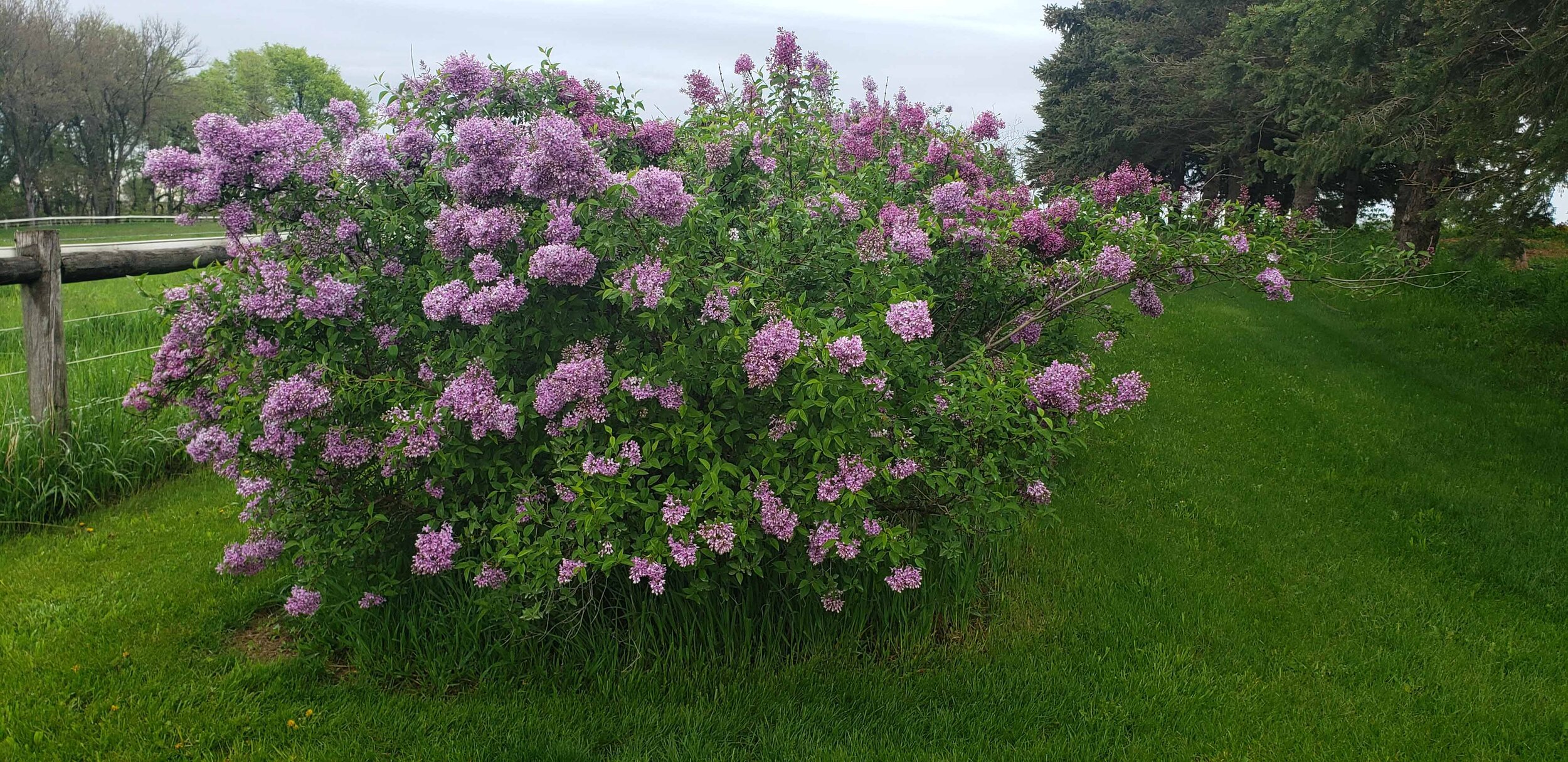
The unusually early spring has the magnolias, forsythia, daffodils, hyacinths, serviceberry, redbud and hellebores blooming in late March. The lilacs and flowering crab apples show the beginning of flower blossoms. The asparagus spears and larch needles have begun to emerge. Most of the beds have been cleared of spent stems and leaves, showing deep brown moist mulch. The pastures have come in thick and delectable.
Bill had mowed the lawn yesterday, ridiculously early, and it gleamed emerald green, surrounding the beds with juicy color. I felt as though I was walking on a pillow. The birds were singing and mating.
The unusually early spring has the magnolias, forsythia, daffodils, hyacinths, serviceberry, redbud and hellebores blooming in late March. The lilacs and flowering crab apples show the beginning of flower blossoms. The asparagus spears and larch needles have begun to emerge. Most of the beds have been cleared of spent stems and leaves, showing deep brown moist mulch. The pastures have come in thick and delectable.
Bill had mowed the lawn yesterday, ridiculously early, and it gleamed emerald green, surrounding the beds with juicy color. I felt as though I was walking on a pillow. The birds were singing and mating.
Snow in the Garden
Snow finally blankets my landscape. I hear a sigh of relief from the gardens as they seem to pull a blanket of snow up under their chins. It is time to sleep at last.
The snow is our friend. It keeps the plants asleep during the winter or dormant season. It insulates them from the fluctuations of temperature. The plant crowns prefer constant conditions. Cold is fine for our hardy plants as long as it remains steady. The snow performs the function of insulation.
Our acreage sits on a hill, a very windy hill. No snow cover in the winter together with extreme wind chill temperatures pose problems for garden plants. It is not unusual in Iowa to have very cold winters with little snow. Many people here say, “If it’s going to be cold, it might as well snow.” For plants, this is definitely true.
Mulching gardens with compost, shredded leaves or wood mulch helps protect the plant crowns. Additional winter mulches which need to be removed in the early spring are straw and evergreen boughs. I used to mulch my perennial beds with straw, but as the gardens grew this became impractical. Using a four-season mulch, watering during droughts, watering new plants throughout their first year and leaving fallen leaves on the gardens until the spring give the plants an excellent chance to survive the winter. When I use more tender plants, I will add winter mulch that I remove in late March or early April. For my roses I have used top soil, straw or fall leaves around the base of the plants.
These photos of my garden show the beauty of the garden in winter. The strong contrast of darks and lights is dramatic. The evergreen boxwood and dwarf conifers add color this time of year and illustrate the garden structure. The huge spruce and white pine serve the same roles on a grand scale.
During fall cleanup we edit the garden, leaving the spent plants that will catch the snow in a beautiful way. Plants with seed heads, such as coneflowers, asters, black-eyed Susans and native and ornamental grasses have been left standing. Woody shrubs, such as hydrangea and dogwood, also catch the snow and make a statement against the background.
Another benefit of editing rather than cutting down the garden in the fall, is that the remaining plants provide food and cover for birds during the late fall and winter. Since snow arrived so late this winter, I was able to enjoy my garden of fall color full of birds into December. My gardens which have become perennial and shrub borders contain hundreds of plants that attract insects, butterflies and birds. Cardinals and blue jays spend most of their time in the windbreak and tree tops. Nuthatches and woodpeckers roam the tree trunks. Juncos, finch, and mourning doves scatter around the ground or visit the hanging bird feeders.
This is my chance to plan for next year’s winter garden!
The snow is our friend. It keeps the plants asleep during the winter or dormant season. It insulates them from the fluctuations of temperature. The plant crowns prefer constant conditions. Cold is fine for our hardy plants as long as it remains steady. The snow performs the function of insulation.
Our acreage sits on a hill, a very windy hill. No snow cover in the winter together with extreme wind chill temperatures pose problems for garden plants. It is not unusual in Iowa to have very cold winters with little snow. Many people here say, “If it’s going to be cold, it might as well snow.” For plants, this is definitely true.
Mulching gardens with compost, shredded leaves or wood mulch helps protect the plant crowns. Additional winter mulches which need to be removed in the early spring are straw and evergreen boughs. I used to mulch my perennial beds with straw, but as the gardens grew this became impractical. Using a four-season mulch, watering during droughts, watering new plants throughout their first year and leaving fallen leaves on the gardens until the spring give the plants an excellent chance to survive the winter. When I use more tender plants, I will add winter mulch that I remove in late March or early April. For my roses I have used top soil, straw or fall leaves around the base of the plants.
These photos of my garden show the beauty of the garden in winter. The strong contrast of darks and lights is dramatic. The evergreen boxwood and dwarf conifers add color this time of year and illustrate the garden structure. The huge spruce and white pine serve the same roles on a grand scale.
During fall cleanup we edit the garden, leaving the spent plants that will catch the snow in a beautiful way. Plants with seed heads, such as coneflowers, asters, black-eyed Susans and native and ornamental grasses have been left standing. Woody shrubs, such as hydrangea and dogwood, also catch the snow and make a statement against the background.
Another benefit of editing rather than cutting down the garden in the fall, is that the remaining plants provide food and cover for birds during the late fall and winter. Since snow arrived so late this winter, I was able to enjoy my garden of fall color full of birds into December. My gardens which have become perennial and shrub borders contain hundreds of plants that attract insects, butterflies and birds. Cardinals and blue jays spend most of their time in the windbreak and tree tops. Nuthatches and woodpeckers roam the tree trunks. Juncos, finch, and mourning doves scatter around the ground or visit the hanging bird feeders.
This is my chance to plan for next year’s winter garden!